















Essential Chips For New Energy Vehicle BMS Systems
Essential Chips For New Energy Vehicle BMS Systems
As the global demand for electric vehicles (EVs) continues to grow, the Battery Management System1 (BMS) plays a crucial role in ensuring battery safety, efficiency, and longevity. At the heart of every BMS are specialized chips designed to monitor, balance, and protect battery cells. This article will introduce the essential chips used in new energy vehicle BMS systems, their key functions, and how to select the right components for your EV project.
Why BMS Chips Matter in EVs
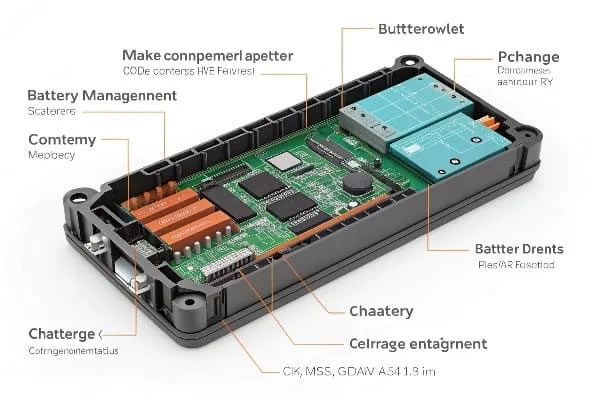
A Battery Management System1 is responsible for overseeing the health and performance of lithium-ion batteries in electric vehicles. Proper BMS chips help prevent battery overcharge, overheating, and premature aging, directly impacting vehicle safety and driving range. Using high-quality, automotive-grade BMS chips ensures reliable battery monitoring and optimal performance.
Key Functions of a BMS System
The BMS uses various chips to perform these critical functions:
Voltage Monitoring2: Measures the voltage of each battery cell to ensure it stays within safe limits.
Temperature Monitoring: Detects overheating and triggers protective actions.
Current Measurement: Monitors charging and discharging currents to prevent damage.
State of Charge (SOC) & State of Health (SOH): Calculates the battery’s remaining charge and overall condition.
Balancing Control: Equalizes cell voltages to maximize battery lifespan.
Core Chip Categories in BMS Design
Battery Monitoring ICs3
These chips monitor cell voltage and temperature. Popular options include Texas Instruments’ BQ769x0 series and Analog Devices’ LTC6811, known for their precision and automotive reliability.
Battery Balancing ICs
Balancing chips help maintain uniform charge levels across cells. Examples are NXP’s MC33771 and Renesas’ ISL78600.
Current Sense Amplifiers
These devices measure current flow to protect against overcurrent conditions. Common models include the INA226 and AD8210.
Microcontrollers (MCUs) for BMS Control4
MCUs process sensor data and control balancing functions. Automotive-grade MCUs such as Infineon’s Aurix and STMicroelectronics’ SPC58 series are widely used.
Communication Interface Chips
CAN bus transceivers like the TJA1042 and MCP2551 enable communication between the BMS and the vehicle’s central controller.
Recommended BMS Chip Brands
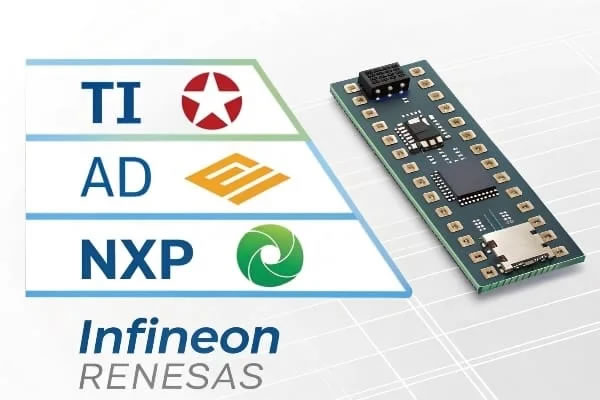
Texas Instruments (TI): Offers highly integrated, automotive-certified battery monitoring ICs.
Analog Devices (ADI): Renowned for high precision and robustness in battery management.
NXP: Strong in automotive communication and balancing IC solutions.
Infineon: Leading supplier of safety-certified MCUs and power management ICs.
Renesas: Provides comprehensive automotive-grade semiconductor solutions.
Key Considerations When Selecting BMS Chips
When choosing BMS chips, consider:
Automotive-grade Certification5: Look for AEC-Q100 compliance for durability and reliability.
Temperature Range: Ensure chips operate reliably from -40°C to +125°C.
Functional Safety Compliance6: ISO 26262 certification is critical for safety-related applications.
Supply Stability and Authenticity: Source genuine components from trusted suppliers to avoid counterfeits.
Compatibility: Select chips suited for your battery chemistry, such as Li-ion, LFP, or NCM.
Conclusion: Choosing the Right BMS Chip for Your EV Project
Selecting the right BMS chips is essential to guarantee battery safety, maximize performance, and extend battery life. Partnering with reliable suppliers who offer genuine automotive-grade components will help ensure your EV projects succeed.
Looking for genuine BMS chips or a complete BOM quotation for your EV project? Contact us today for original, in-stock automotive-grade components with fast delivery.
1.Understanding BMS is crucial for ensuring battery safety and efficiency in EVs. ↩ ↩
2.Learn about voltage monitoring to ensure safe operation of battery cells in EVs. ↩
3.Explore top ICs to enhance battery performance and reliability in EV applications. ↩
4.Discover how MCUs optimize BMS functions for better battery management. ↩
5.Learn about certification standards that guarantee quality and reliability in automotive components. ↩
6.Understanding compliance ensures safety and reliability in EV battery systems. ↩